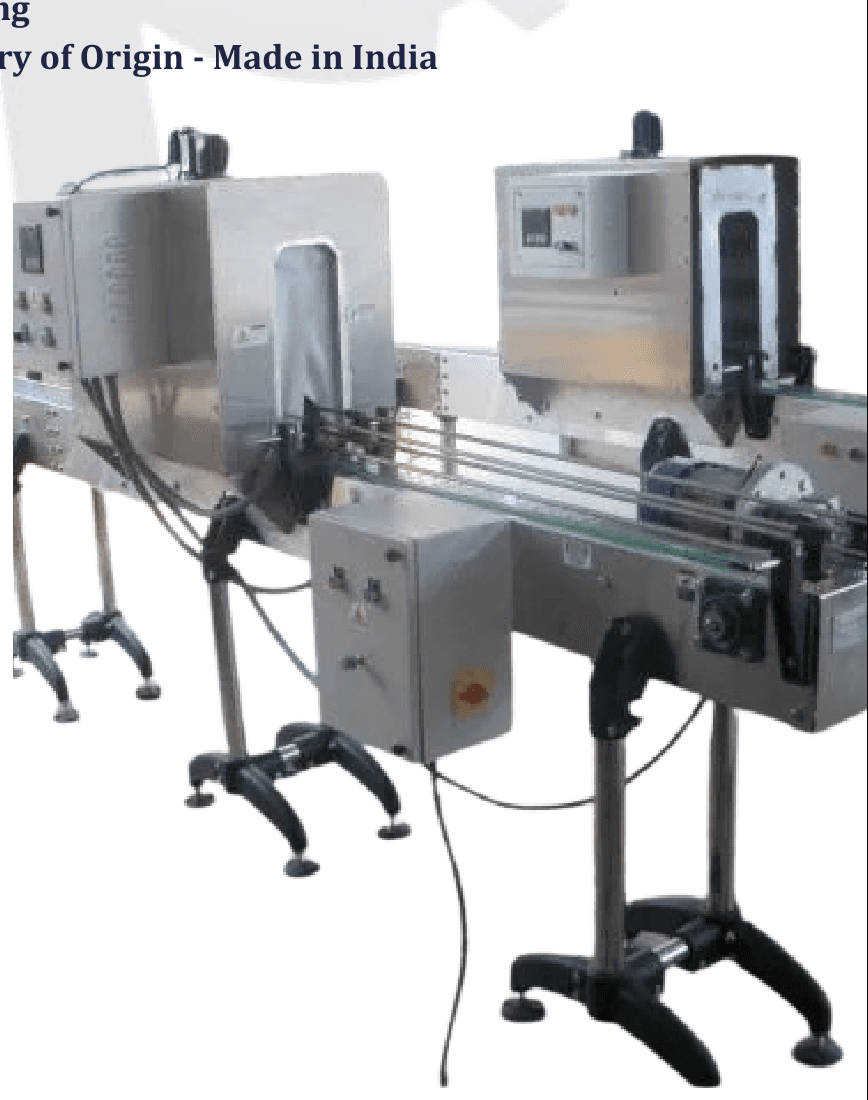
Sleeve shrinking depends on both the container and the sleeve. Changes in material, contour, filled weight or printed artwork can change the result even when a container's nominal size is unchanged. Define whether the application is a body sleeve, neck sleeve or another agreed format before discussing the machine configuration.
What must be clarified in the quotation?
For the sleeve shrink wrapping machine, ask which operations are supplied: placing the sleeve, transporting the container and shrinking it. Sleeve application and shrinking are distinct tasks; the enquiry should say whether sleeves are applied manually or by other equipment.
Provide sleeve material and thickness, container drawings and filled samples. Tell the supplier which product variants share a line and whether the container is empty or filled during processing. The suitable heat source, exposure and handling method must be confirmed for that combination rather than assumed from a generic machine description.
How do you judge the sample result?
Check sleeve height, rotation, wrinkles, artwork distortion and the fit around shoulders or recessed areas. If the sleeve includes a perforation or opening feature, test its function using your acceptance method. Confirm that mandatory printed information remains legible and that a barcode, where used, can be read on the finished pack with the intended reader.
Inspect the closure and container after cooling. A sleeve that looks correct immediately after processing may still move or reveal uneven shrinking later. Ask your packaging supplier to participate when sleeve shrink direction or printed registration contributes to the issue.
What should an application brief contain?
- Container material, profile, dimensions and processing orientation.
- Sleeve drawings, film specification and printed samples.
- Fill condition and any product temperature limits.
- Expected output, changeovers and upstream application method.
- Defined sleeve-position tolerance and appearance acceptance samples.
When should line changes be considered?
Unstable transfer or inconsistent sleeve placement may need a handling change rather than more heat. Review guides, conveyor support and spacing through custom machine design. For a new pack, begin with a controlled application consultation and a recorded sample trial before treating the result as an approved production process.