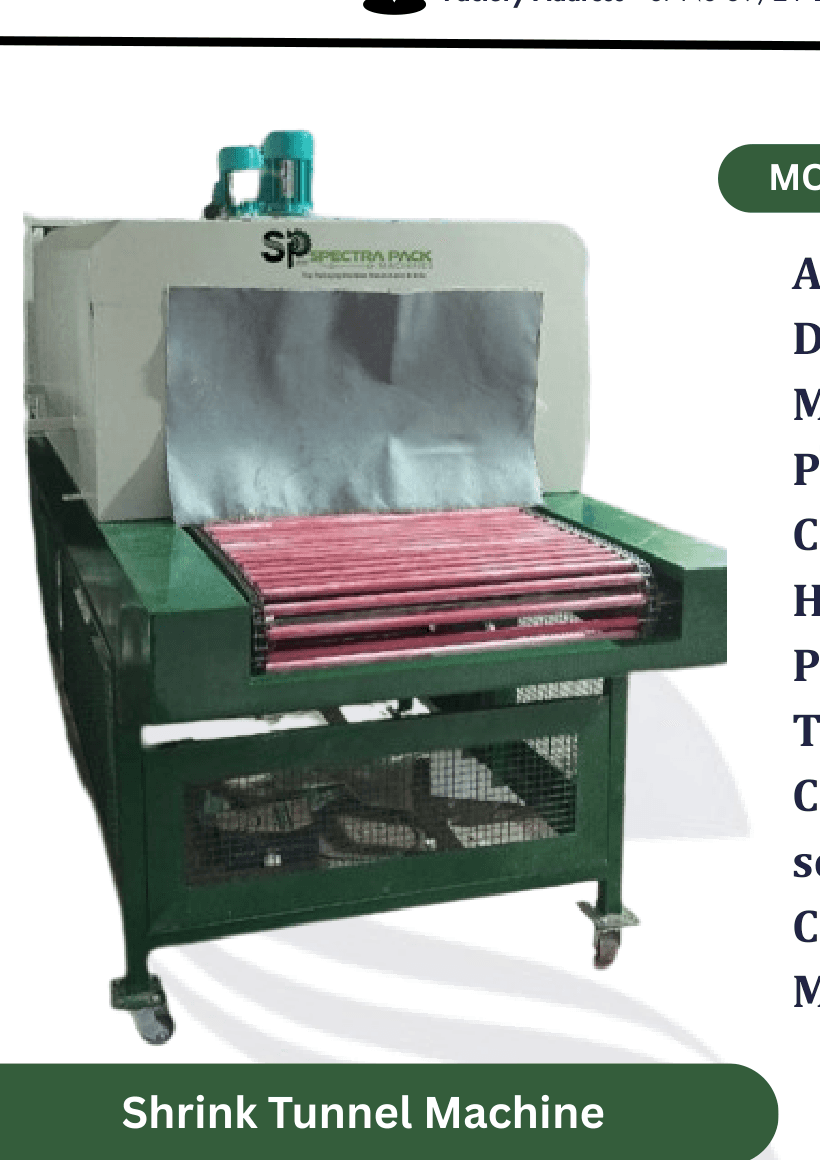
A shrink tunnel works as part of a packaging system: product, film, sealing method, airflow and exposure time all affect the finished pack. A temperature copied from another line may distort your product or leave loose film. Begin with the film supplier's processing guidance and the machine operating manual, then run a documented product trial.
What should you measure before the trial?
Record the largest and smallest product dimensions, pack weight, film grade and thickness, and whether the wrapped product tolerates heat. Keep sample products from normal production, including awkward edges and variable carton shapes. Confirm that the selected shrink tunnel machine has the usable passage and conveyor support your packs need.
Required output should be expressed as acceptable finished packs per minute. Conveyor speed alone is not production capacity: gaps between packs, loading time, sealing time and rejects also matter. Include these losses in the trial instead of multiplying a maximum belt speed by a theoretical pack spacing.
How do you adjust a shrink tunnel systematically?
Start within the machine and film suppliers' recommended ranges. Allow the tunnel to stabilize, keep the pack orientation consistent, and change one parameter at a time. Record temperature setpoint, conveyor setting and the resulting appearance. Inspect the base and corners as well as the most visible face; a good top surface can hide an open seam underneath.
Loose film can have several causes, including film selection, excess film, airflow or insufficient exposure. Burn-through and distortion can indicate excessive exposure, but inspect sealing quality and film contact too. Do not compensate for every defect by raising temperature. Stop the trial if the product or film behaves outside the agreed operating limits.
What belongs in the approved setup record?
- Product code, pack dimensions and approved film specification.
- Recorded settings, pack spacing and start-up stabilization procedure.
- Photographs of acceptable packs and defined rejection examples.
- Good packs produced, rejected packs, stoppages and measured trial duration.
- Safe shutdown, cleaning and changeover instructions from the supplier.
When should you request application support?
Ask for machine selection consultation when one tunnel must cover several pack sizes or when heat-sensitive products limit the processing window. A witnessed trial with your materials is more useful than an unsupported promise of speed or film saving. Agree the acceptance criteria before placing the order and carry the approved recipe into installation and commissioning.