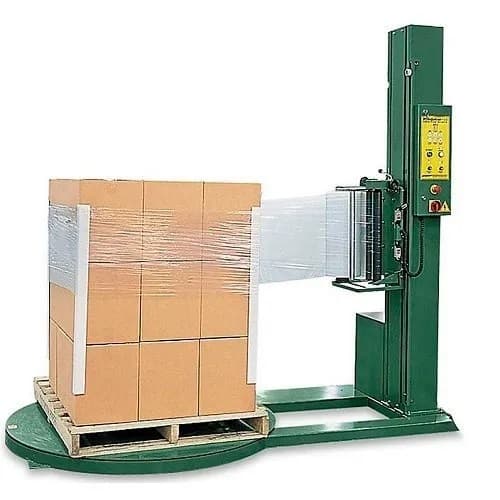
Pallet stretch wrapping helps contain a unit load, but the result depends on the stack, pallet condition, film and wrapping recipe together. The aim is a load that remains acceptable through the intended handling sequence. Using more film or greater tension does not automatically make an unstable stack suitable for dispatch.
Which load details affect the machine choice?
Measure pallet length, width, loaded height and total weight, including the largest routine load and any overhang. Record how pallets arrive and leave: pallet truck, forklift or another conveyor. Confirm the loading arrangement, available turning space and machine rating with the supplier.
Compare the pallet stretch wrapping machine and pallet stretch wrap machine using their quoted configurations. Ask for the film carriage method, adjustment range and any functions included with that model. Do not infer pre-stretch capability or a film-saving percentage from a general product title.
How should a film trial be run?
Use actual stacked loads with the intended film supplier and grade. Record wrap pattern, bottom and top wraps, overlap and the applicable machine settings. Inspect weak carton panels and corner damage after wrapping. A recipe that suits rigid cartons may crush a lighter or partly filled pack.
Measure film consumption per accepted load by an agreed method and compare equivalent acceptance conditions. Include normal handling and storage steps in the evaluation. The necessary checks depend on your distribution process; a stable load at the wrapper is only the starting point for the dispatch review.
What should the acceptance record include?
- Pallet pattern, carton type, load dimensions and total weight.
- Film supplier, grade, width and thickness.
- Recorded wrap recipe and photographs of the approved load.
- Film used, wrapping time and handling observations.
- Loading, film-change and maintenance procedures.
How do you keep performance consistent?
Check pallet damage and stacking quality before the load reaches the wrapper. Use application consultation when changing film or load type, then recheck the affected recipe. Ask after-sales support about model-specific film carriage maintenance. Treat claimed cost reductions as results to measure in your trial rather than guaranteed savings for every pallet.