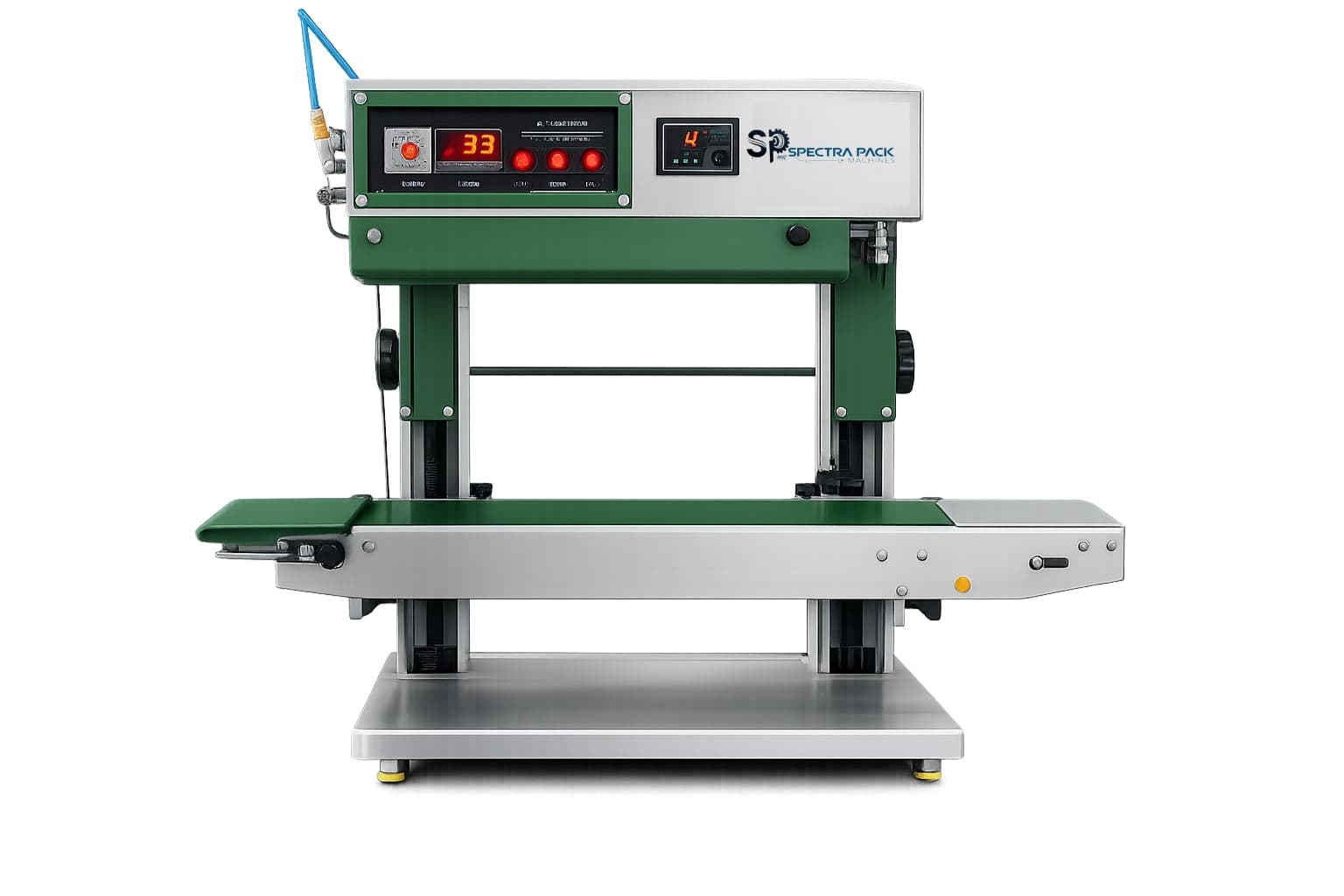
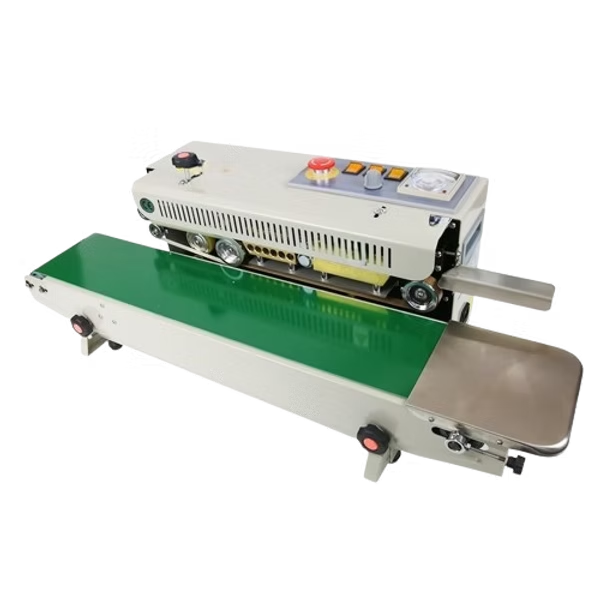
A band sealer continuously moves the mouth of a pouch through the sealing path. It needs compatible pouch material and a controlled, clean sealing area. The machine format should follow how the filled pouch must be supported while sealing, including the possibility of contents reaching the open mouth.
When should horizontal or vertical orientation be reviewed?
Horizontal handling can suit packs whose contents remain stable while the pouch lies on the conveyor. Compare the mini horizontal band sealer and master horizontal band sealer using actual filled packs, required support and available working space.
If the pack must remain upright, review the master vertical band sealer. Confirm the usable height adjustment, filled-pack weight and conveyor support for the chosen model. Upright sealing still requires enough clean pouch headspace and controlled feeding; it does not make every liquid or powder application suitable automatically.
How should you run the sealing trial?
Use production pouches from the intended supplier and filling conditions representative of normal work. Trial the lightest and heaviest fills as well as the least stable pack. Have the supplier establish a suitable sealing window for the material, then record the settings and inspect both appearance and seal performance using a product-appropriate method.
Wrinkles, contamination, poor mouth alignment and mismatched conveyor movement can all affect consistency. Do not try to solve every weak seal by increasing heat. Check whether the bag is being pulled or dragged and whether the support remains stable as the pouch exits. Keep hands clear of moving and heated parts.
What should you include in the buying brief?
- Pouch material structure, thickness and mouth dimensions.
- Filled-pack weight, product flow characteristics and headspace.
- Required acceptable pouches per minute and shift pattern.
- Batch changes, cleaning requirements and optional coding needs.
- Agreed seal checks and sample retention procedure.
How do you maintain consistent results?
Review the full band sealer range around the job, and ask for a list of model-specific consumables. Establish cleaning and inspection routines using the operating manual. Use after-sales and spare-part support when bands, belts or control problems recur; repeated adjustment without diagnosing wear can hide the underlying fault.