
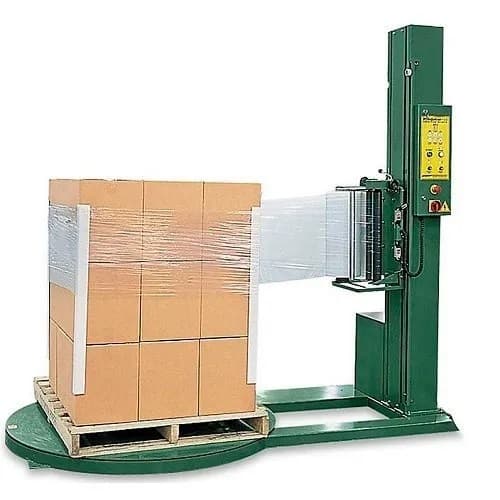
An unstable pallet may need changes to stacking or packaging as well as its wrapping recipe. A wrapper cannot be assumed to correct every weak carton, poor pallet or unsupported overhang. Begin with a representative unit load and a written definition of the handling it must tolerate.
What should be checked before wrapping?
Inspect pallet condition and the way cartons or products are stacked. Record overhang, gaps, mixed carton sizes and weak layers. Photograph the load from several sides. If the stack is already leaning, ask the responsible packaging and handling teams to review it before running the trial.
Confirm that the load fits the specified pallet stretch wrapper and that its weight is within the confirmed machine limits. Use the prescribed loading and exclusion procedures. Operators should not steady an unstable load by hand while the equipment moves.
How should the wrapping trial be compared?
Use the same load pattern and film specification when comparing recipes. Record the approved settings and film used. Inspect carton compression, corner damage, film tearing and movement of the load relative to the pallet after wrapping.
Perform the agreed handling check using the site's approved method and suitable personnel. A short movement on a smooth floor does not prove performance under every transport condition. Define the actual test boundary and record what has and has not been demonstrated.
What belongs in the load recipe?
- Pallet and product identifiers with stacking photographs.
- Film specification and approved wrapping settings.
- Measured film use and the accepted finished appearance.
- Handling observations and examples of rejected loads.
When should the recipe change?
Review new carton strengths, mixed-load patterns or film specifications with after-sales support. Reassess the complete package when failures recur instead of repeatedly increasing film tension. The wrapper selection guide provides the machine and material information needed for that review.