
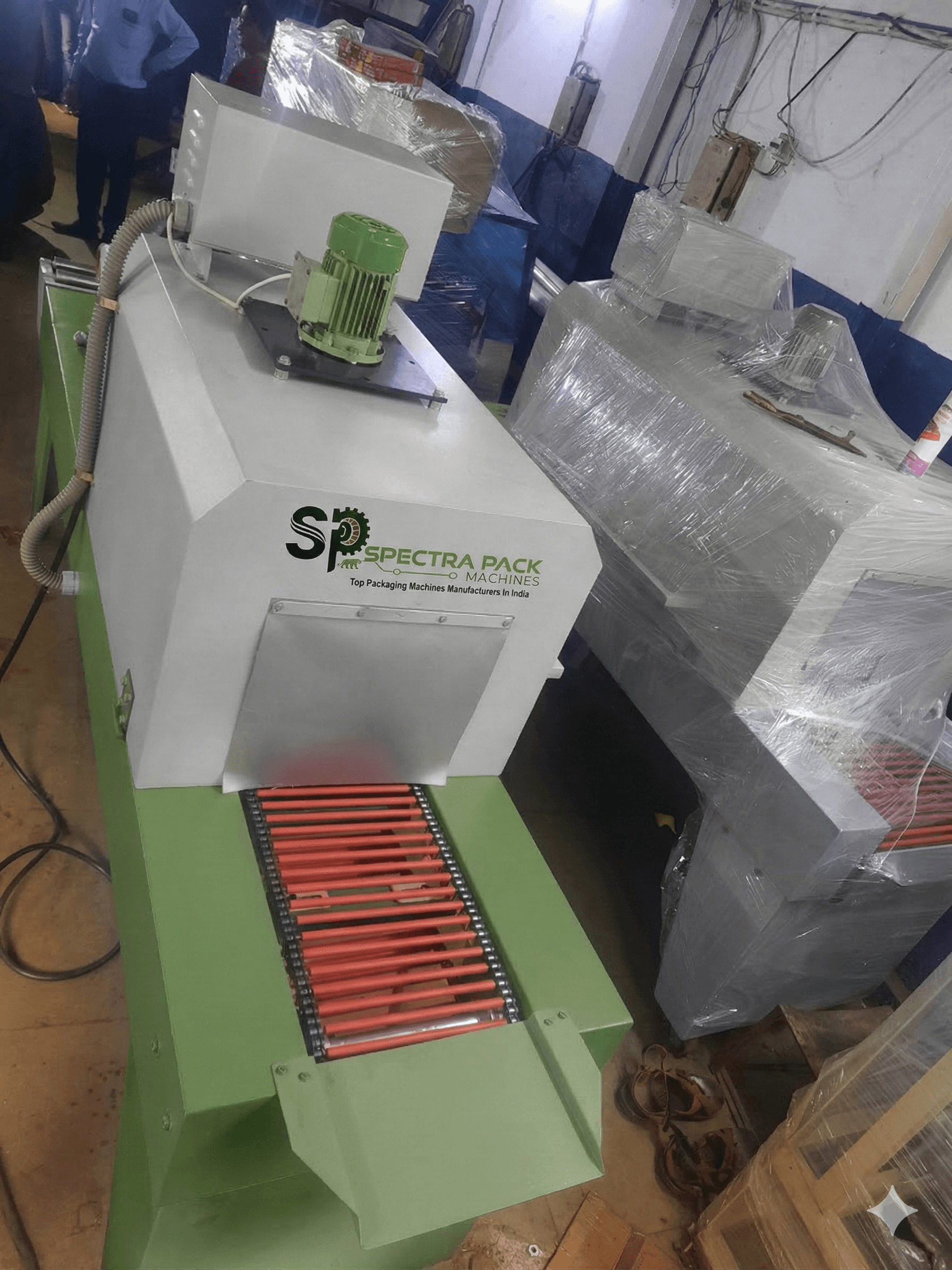
An L-sealer forms a film enclosure before the pack passes through a shrink tunnel. Choosing a machine starts with the space needed for the product, film and sealing action together. The nominal sealing dimensions alone do not describe every product that can be packed successfully.
Which dimensions should be supplied?
Measure the smallest and largest product, including projections, uneven surfaces and any supporting tray. State how the product is oriented during wrapping. Ask the supplier to confirm working clearance and the film arrangement for each format rather than using a guessed film-width formula.
Compare the L-sealer with shrink tunnel and fully automatic L-sealer using identical products. Explain whether items arrive individually, in irregular spacing or in batches that an operator will prepare.
How should film compatibility be checked?
Provide the intended film grade and supplier guidance. Ask for confirmation of sealability and shrink performance on the complete system. Product heat tolerance, printed surfaces and sharp corners deserve specific checks. A film that forms a seam may still give an unacceptable result in the tunnel.
Run enough samples to inspect the seal around the full package, including corners and the base. Compare the result after cooling and handling. Record the film specification used in the approved trial so future material substitutions can be evaluated against a known reference.
What affects the automation decision?
- Product spacing and orientation at the infeed.
- Operator loading work and replenishment time.
- Format changes and any required change parts.
- Downstream tunnel and unloading capacity.
What should the quotation define?
Include sealing equipment, tunnel, conveyor interfaces, film handling and training in the supply discussion. Ask machine consultation to confirm the complete configuration. Use the companion L-sealer trial guide to turn the dimensional shortlist into a practical acceptance test before ordering.