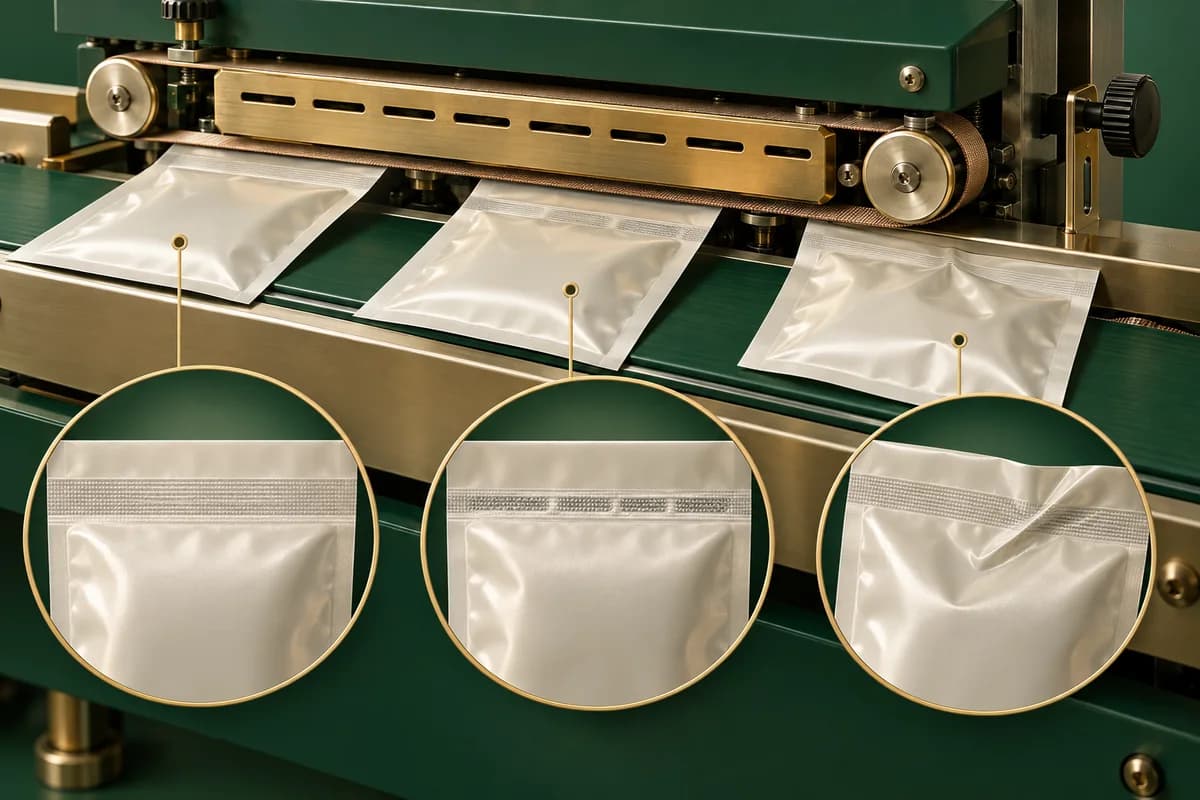

A weak pouch seal can result from a material problem, an operating change or a machine condition. Start with labelled samples and a record of when the fault appeared. Describing the observed defect is more useful than ordering a replacement part based only on a guess.
Which material details should be compared?
Record the pouch supplier, material structure, batch and recommended sealing conditions. Compare a pouch from the last accepted batch with the current one. Note changes in thickness, print, gussets or the number of material layers at the seal.
Check whether powder, oil or product has entered the intended seal area. A clean empty pouch test may help the supplier compare material response, but it does not replace a trial with the actual filled product. Keep the final acceptance based on production conditions.
How can presentation cause inconsistent results?
Observe whether operators present the pouch mouth straight and at a repeatable height. For a horizontal band sealer, check whether the pack is supported as intended. For a vertical band sealer, confirm that filled weight is carried by the support arrangement rather than the sealing path.
Use the installed machine's operating instructions for permitted adjustments. Do not touch sealing bands, heated parts or moving mechanisms while the equipment runs. Wear-part inspection and replacement belong in the prescribed shutdown and isolation procedure.
What should be recorded for technical support?
- Photographs of the full pouch and the defective seal.
- Whether the problem occurs from startup or after continued running.
- Material identifiers and approved settings.
- Any recent maintenance, material or product changes.
How should a correction be accepted?
Run a documented batch and perform the agreed seal-integrity check after cooling. Appearance alone does not establish a reliable seal. Ask after-sales support to review recurring defects. The orientation selection guide helps determine whether the handling arrangement itself should be reconsidered.